

CEO Check-In Series: Embracing a New Career Chapter
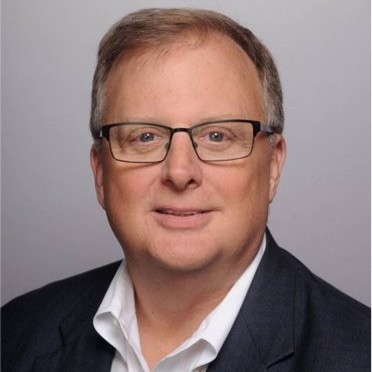

David Owens
General Partner, Bowman’s Tower Venture Partners
When Ashton Tweed last talked with J. David Owens, he had left a 30-year career at traditional pharmaceutical companies to become an angel investor and advisor to early-stage life science companies. He was also serving as CEO of BiologicsMD, a largely virtual company focused on developing therapies to treat bone disorders and hair loss due to various conditions.
Eleven years later, when a friend mentioned reading his Ashton Tweed Q&A, Mr. Owens took the opportunity to revisit it. “I was pleasantly surprised that it read like what I would tell my younger self,” he said. After leaving BiologicsMD in April, Mr. Owens is now focused on his work with Bowman’s Tower Venture Partners — named after a historic landmark near his Bucks County, Pennsylvania, home — which invests in and advises early-stage life science companies.
In his latest interview with Ashton Tweed, Mr. Owens shares how he’s making the next chapter of his career all about supporting local early-stage companies.
Ashton Tweed: When Ashton Tweed first interviewed you, you had been CEO of BiologicsMD for about two years. You left the company in April, although you remain on its board. Why was this year the time for you to move on?
David Owens: BiologicsMD has pivoted, due to some opportune conditions in the marketplace, to developing hair cycle stimulators to treat alopecia from various causes. A board member who recently retired from Yale University Medical School, where he was head of the department of dermatological surgery, saw the pivot as a great opportunity for him to get more involved and to move the company forward by leveraging his dermatology expertise, and I thought it would be a good time for me to step aside. So, I’m transitioning.
AT: You co-founded Bowman’s Tower Venture Partners in 2016. How did that come about?
DO: Most of us in this group had invested together as part of the local Philadelphia angel groups, like Robin Hood Ventures, the Mid-Atlantic Angel Group Fund and Delaware Crossing Investor Group. We had a couple of really good successes, including Novira Therapeutics, which was sold to Johnson & Johnson in 2015, and OrthogenRx, which was sold to Avanos Medical in 2022. These were good exits for the Philadelphia early-stage investor community.
So in 2016, a group of us decided to invest solely in life science areas that angel groups weren’t focused solely on, like early-stage drug development and medical devices. Many of us are former pharmaceutical senior executives and operators who are over 60 years old, and passionate and knowledgeable about the early-stage life science ecosystem. We’re all people who still want to stay in the game but don’t want a traditional nine-to-five job.
We take our time to find the earliest stage companies to help. We provide more than capital — we also provide expertise. We’ve got lawyers, financial people and, obviously, medical people, so we can provide skills to new entrepreneurs and help them set up a good enterprise framework. In return, we get a little bit of early stock in the startups.
AT: What advice do you find yourself giving most frequently to new entrepreneurs?
DO: A lot of early-stage entrepreneurs are scientists, people who have a great idea, who came out of either academia or the pharmaceutical industry. A lot of them believe that the science will prevail and they can learn all the other stuff to start a company simply enough. But the reality is that they need experienced people to help them.
You have to get lab space, file patents and figure out how to pitch investors. You’ve got to set up your corporate structure, manage your bills, hire people and do all kinds of things that aren’t necessarily what scientists know how to do right away. We help them think through the steps for managing a business, because once you start taking what we call “OPM” — other people’s money — it’s a whole different dynamic. When you take investment money from people, they’re expecting results or an explanation of what didn’t go right.
AT: What has been your biggest challenge in working with early-stage companies?
DO: Learning from your mistakes. It’s not an easy thing to do, but I’ve grown to appreciate that your mistakes probably offer the best lessons you ever learn. When something you did or what you were thinking didn’t work out the way you thought it would, it forces you to go back and look at what went wrong. I have to say I haven’t made many large mistakes, but I did have one company that I invested in fail in a tremendous way.
AT: What happened?
We invested pretty heavily in a company that failed to live up to expectations. We learned that we could have been better in our due diligence and understanding of the business sector they were in. It was a space that we didn’t really know; it pays to spend time and think about what you’re investing in, so that you can predict what some of the issues may be down the road. It was our — knock on wood — first and only failure so far. I’m just thankful that we continue to have success with the things we’re doing.
AT: In your 2015 Q&A, you talked about reinventing yourself over the course of your career. A lot of people find change difficult. How have you cultivated a mindset that embraces change?
DO: [Laughs] I wish my wife were here. She would say I don’t like change at all, like changing the furniture or changing the house paint, all that kind of stuff. But I learned early on that change is inevitable and with change comes opportunity. The pace of change now is so dramatic, and I’ve realized that with the world changing so fast, you either have to be on board or not. And I think I’d rather be on board with it.
One of the other things that I realized in my 40 years in the pharmaceutical industry is that the industry is filled with lemmings. One company jumps off the cliff into a pharma space and then all of a sudden everybody else does too, like GLP-1s. One company, then two got into GLP-1s, and now all of a sudden there are 50 companies following the first movers. I stay away from the major big impactful things — they become very competitive and crowded very quickly. Our group wants to find opportunities that fulfill unmet medical needs and thus could be a next major thing, not be one of the followers.
AT: If someone comes across this Q&A in a year or five years, what would you like them to know?
DO: I’d like them to know it takes a community to drive innovation. Any business depends on a lot of different people, and on the connectivity between different people. The life science community includes physicians, scientists, lawyers and others, including recruitment professionals such as Ashton Tweed, and all those people play an important part. A single scientist or a group of physicians is the catalyst, but they need all these other people to help get the organization moving. With all of us working together, we can make great strides.
David Owens is a General Partner and Co-Founder of Bowman’s Tower Venture Partners, and a member of the board of directors of BiologicsMD, Pennsylvania Biotechnology Center, Seneca Therapeutics Inc. and the Bucks County Herald Foundation.